

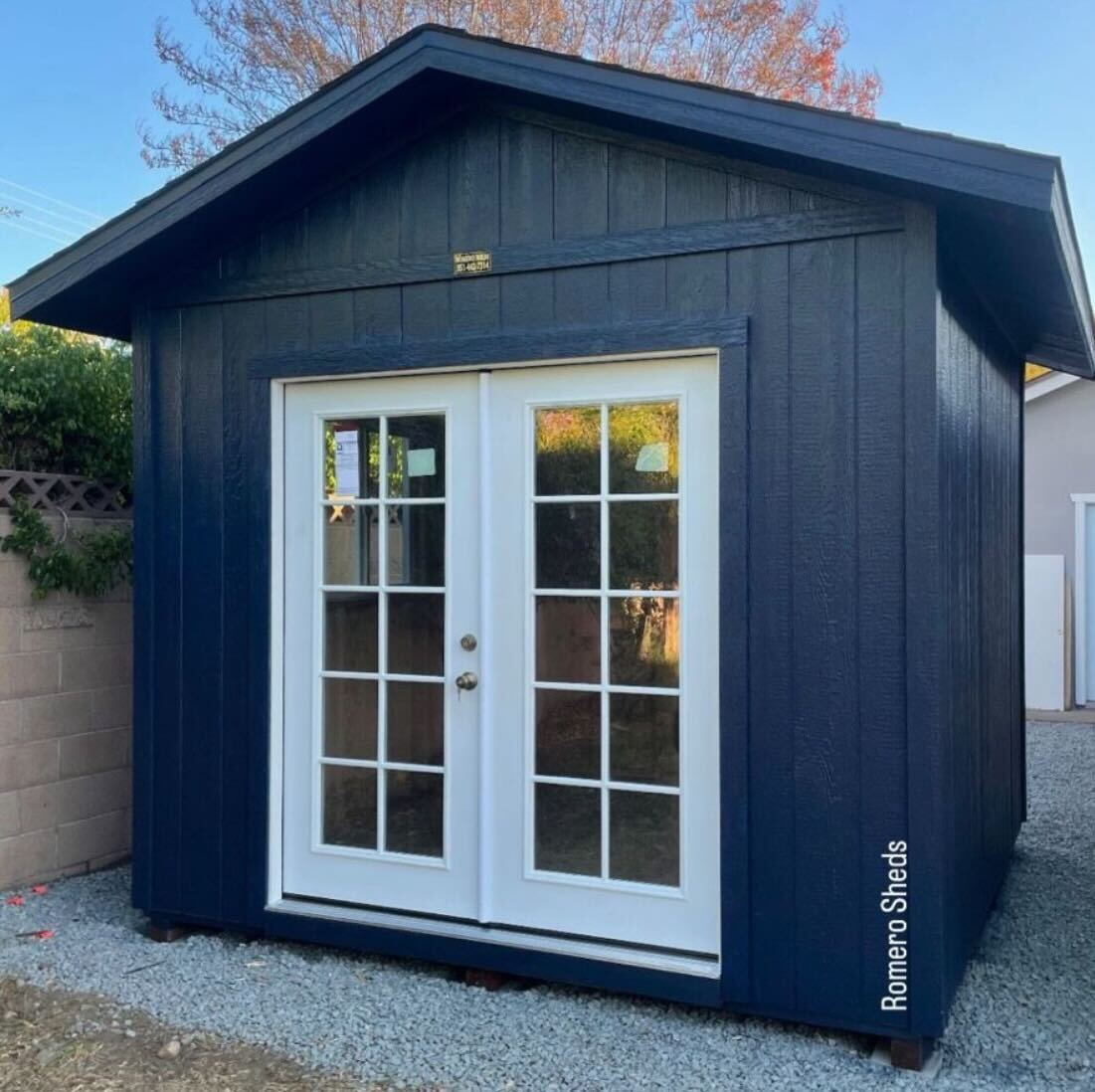
You need more storage space. The garage is overflowing, the basement is packed, and your lawn equipment is leaning against the wall. A backyard shed is the answer—but with so many options, how do you choose the right one? At Romero Sheds, we’ve been building custom sheds for Southern California homeowners for years. We’ve seen what works and what doesn’t. This practical guide will walk you through everything you need to know about how to choose utility shed options, from size and material to foundation and quality features. By the end, you’ll be ready to select the perfect storage shed for the backyard that meets your needs and budget.
Step 1: Determine Your Shed’s Purpose
Before you look at any types of storage sheds, ask yourself: What will you store?
Common shed uses include:
-
Garden tool storage: Rakes, shovels, hoes, and pruning shears.
-
Lawn equipment: Lawn mower, trimmer, blower, and chainsaw.
-
Holiday decorations: Christmas trees, ornaments, and outdoor lights.
-
Workshop or hobby space: Woodworking, potting, or craft area.
-
Outdoor gear: Bicycles, camping equipment, and fishing gear.
Your purpose directly impacts the size, layout, and features you’ll need. A shed for lawn equipment needs wide doors. A workshop needs windows for natural light. Holiday decorations need loft space. Knowing what to store in shed helps you plan better.
Pro tip: Walk around your garage and identify everything that will go into the shed. Make a list. This will help you visualize the space you need.
Step 2: Choose the Right Size (Go Bigger Than You Think)
One of the most common regrets among shed owners is not going big enough. When asking what size shed do I need, consider not just what you’re storing now, but what you might store in the future.
Standard shed sizes and their typical uses:
-
6×8 (48 sq ft): Small garden tools, a push mower, and a few bins.
-
8×10 (80 sq ft): Riding mower, larger tools, and shelves.
-
8×12 (96 sq ft): Workshop space plus storage.
-
10×12 (120 sq ft): Two-person workshop or extensive storage.
-
10×16 (160 sq ft): Large equipment, multiple bikes, and workbench.
-
12×16 (224 sq ft): Serious workshop or hobby space.
Sizing tips:
-
Measure the footprint of your largest equipment (riding mower, snow blower).
-
Add 3 feet in front of each large item for walkway space.
-
Plan for shelving (usually 12-24 inches deep).
-
Allow room to move around comfortably.
The old rule applies: Buy the biggest shed your budget and property allows. Empty space is rare in a shed.
Step 3: Select the Best Material for Your Shed
Wood vs metal sheds is a common debate. Here’s what you need to know about the best material for sheds for backyard use.
Wood Sheds (LP SmartSide):
-
Pros: Natural look, blends with landscaping, paintable, durable (50-year warranty), holds nails/screws for shelving.
-
Cons: Requires maintenance (painting/sealing every few years).
-
Best for: Homeowners who value aesthetics and plan to keep the shed for decades.
Metal Sheds:
-
Pros: Very durable, fire-resistant, low maintenance, no rot or pests.
-
Cons: Can dent, may rust over time, industrial look, difficult to modify or add shelves.
-
Best for: Industrial settings or where fire risk is a concern.
Resin/Plastic Sheds:
-
Pros: Low maintenance, lightweight, no painting.
-
Cons: Less durable, can become brittle in sun, feels flimsy, limited sizes.
-
Best for: Temporary or very light-use storage only.
Romero Sheds Recommendation: For long-term backyard storage, high-quality wood (LP SmartSide with 50-year warranty) offers the best combination of durability, aesthetics, and functionality.
Step 4: Consider Roof Style and Aesthetics
The roof style affects both the look of your shed and its interior storage space.
Gable Roof (A-frame):
-
Classic peaked roof.
-
Excellent water runoff.
-
Great for loft storage.
-
Most popular for design garden sheds.
Barn Roof (Gambrel):
-
Distinctive barn shape.
-
Maximum overhead storage space.
-
Charming, rustic look.
Lean-to (Shed Roof):
-
Single-slope, modern look.
-
Often attached to existing structure.
-
Simple, clean lines.
Your choice of roof style can also be a how to choose utility shed decision based on what you plan to store overhead.
Step 5: Plan for the Foundation
Your shed needs a solid, level base. The shed foundation requirements depend on your soil and local codes.
Foundation options:
-
Pressure-treated wood skids (included with Romero Sheds): Good for level, well-draining ground. The shed rests on 4×4 pressure-treated skids.
-
Gravel pad: Improves drainage, reduces moisture under the shed. Client responsible for preparation.
-
Concrete slab: Most stable, longest-lasting, most expensive. Requires perfectly level, exact-sized slab.
Important note: For Romero Sheds, we handle the foundation as part of our shed installation process. The client is responsible for ground preparation and leveling before we arrive.
Step 6: Check Permit Requirements
In many Southern California cities, sheds under a certain size (often 120 sq ft) do not require a building permit. However, you should always check with your local building department.
What to ask:
-
What is the maximum size without a permit?
-
Are there setback requirements (distance from property lines)?
-
Are there height restrictions?
-
Do I need a zoning review?
Permitting and zoning are the client’s responsibility. We’re happy to advise based on our experience, but always verify with your local office.
Step 7: Look for Quality Construction Features
Not all sheds are built equally. Here’s what separates a durable shed from one that will fail in a few years.
Red flags to avoid:
-
24″ spacing on walls and flooring (industry minimum).
-
Roll roofing (low-quality, short lifespan).
-
Untreated lumber on foundation (will rot quickly).
-
Thin, low-grade siding.
Quality indicators (Romero Sheds standards):
-
16″ spacing on walls and flooring (significantly stronger).
-
Residential lifetime shingle roofing (never roll roofing).
-
Pressure-treated wood on entire foundation (4x4s or 4x6s for extra protection).
-
50-year LP SmartSide siding (resists rot, decay, and termites).
-
Weatherproof with flashing and underlayment.
When you’re comparing builders, ask about these features. They determine how long do sheds last.
Step 8: Decide Between Prefab or Custom Built On-Site
Prefab sheds: Delivered fully assembled on a trailer. Limited customization. May not fit your specific space perfectly. Foundation is often inadequate.
Custom built on-site (Romero Sheds): We build your shed from the ground up on YOUR site. This allows us to tailor to your exact space, ensure a proper foundation, and build a stronger structure. We cut and build all sheds on-site.
The shed installation process for on-site builds takes one day for most sizes. You get a shed that’s perfectly fitted to your property and built to our high standards.
Step 9: Plan for Maintenance
Shed maintenance tips to extend the life of your investment:
-
Wood sheds: Paint or seal every 3-5 years. Touch up sooner if you see peeling.
-
Check for leaks: After heavy rain, inspect the roof and corners.
-
Keep gutters clean: If you have gutters, clear leaves and debris.
-
Check for pests: Look for signs of termites, rodents, or wasps.
-
Improve ventilation: Ensure wall vents aren’t blocked. Good airflow prevents mold and mildew.
A well-maintained shed can last 20-30 years or more.
Step 10: Get a Free Quote from a Trusted Builder
Once you’ve determined your size, style, and features, it’s time to get a quote. At Romero Sheds, we provide free, no-obligation quotes based on your specific needs. We’ll help you select the right types of storage sheds for your property, and we’ll explain every cost upfront.
Are sheds weatherproof? Yes, when built correctly. Our sheds include flashing, drip edge, and underlayment to keep water out.
Call Romero Sheds today for a free quote and let’s build the perfect shed for your backyard.
Frequently Asked Questions
How much does a shed cost?
Shed costs vary widely based on size, materials, and features. A basic 6×8 utility shed starts around $2,700. Larger sheds with lofts, windows, and upgraded doors cost more. Romero Sheds offers transparent pricing with no hidden fees. Contact us for a custom quote based on your specific needs.
Do I need a permit for a shed?
It depends on your city or county. Many Southern California cities do not require a permit for sheds under 120 square feet, but you should always verify with your local building department. Zoning restrictions (setbacks, height limits) may also apply. The client is responsible for permits and ground preparation.
How long does it take to build a shed?
Most sheds are built in one day. Our crew arrives in the morning, builds your shed from the ground up on your site, and finishes by late afternoon. Larger or more complex sheds may take two days. We’ll give you a timeline when you book.
What’s the best foundation for a shed?
For most homeowners, a level gravel pad or our included pressure-treated skids work well. For the most stable, permanent foundation, a concrete slab is best but more expensive. We’ll advise you based on your soil and local conditions.
Do you offer financing?
Contact us to discuss payment options. We strive to make quality sheds accessible to homeowners.
Summary and Call to Action
Choosing the right shed for your backyard storage needs comes down to understanding your purpose, sizing appropriately, selecting quality materials, and working with a builder who prioritizes durability over shortcuts. At Romero Sheds, we build sheds that last—with 16″ framing spacing, lifetime shingle roofing, pressure-treated foundations, and 50-year LP SmartSide siding.
Ready to get started? Call Romero Sheds today for a free quote and let’s build the perfect storage solution for your backyard.